Recently, while travelling in Nepal I stopped for lunch in a quaint mountain town called Bandipur, located a few miles southeast of Pokhara. In one restaurant I noticed a grey-bearded man with long hair writing intently on notebooks strewn about his table. This level of main-character energy is pretty rare so I felt compelled to strike up a conversation. I asked what he was writing about and we began discussing his spiritual and intellectual journey. He was French and had been travelling for the last 40 years in India, following various strains of Hindu thought and philosophy in pursuit of self-discovery.
We spoke about religion and the limitations of Western philosophical attempts at spiritual insight and he recommended I read Sri Aurobindo, an influential Indian philosopher and yogi. A few days later in Kathmandu I picked up several of his books, including “Integral Psychology” by Indra Sen, a professor of philosophy at the University of Delhi who left his post to study with Aurobindo in his Ashram in Pondicherry near Chennai.
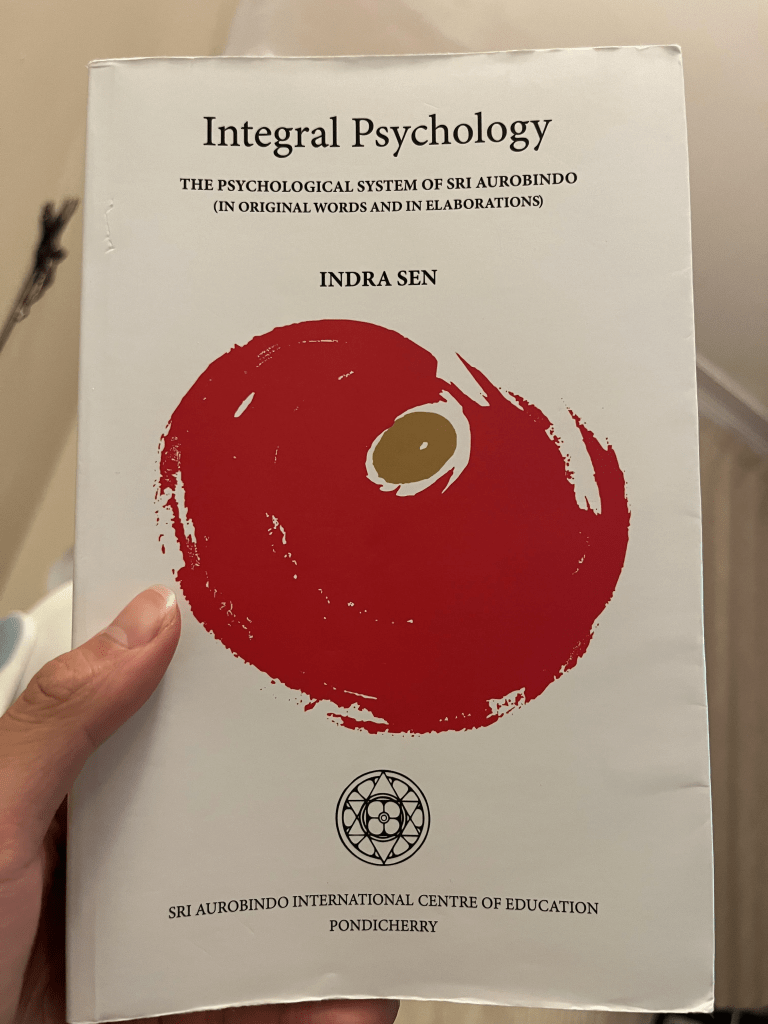
In Integral Psychology, Sen raises the thesis that the Yogic (and especially Aurobindo’s) conceptualisation of the mind is superior to Western conceptualisations of the human condition because it is aspirational and future-oriented rather than pathological and past-oriented. Sen does this by comparing Aurobindo’s (and the Yogic) conception of mind and consciousness with Western psychology, particularly in reference to the psychoanalytic theories of Freud and Jung.
Aurobindo, in the Yogic tradition, assumes the existence of Yogic states of unifying or harmonising consciousness which he terms ‘super-’ or ‘psychic-’ consciousness. Sen suggests this to be a complementary idea to the Jungian notion of the ‘centred self’ or the ideal of the ‘unified personality’. However, writes Sen, although Jung gets close — on account of his mystical bent — he failed to fully appreciate the transcendental quality of Yogic states. Sen admonishes Jung for failing to appreciate a qualitative difference in the ‘super-conscious’ states of the enlightened or yogic masters, as Jung considered these states as no more than returning to a state of unstructured unconsciousness.
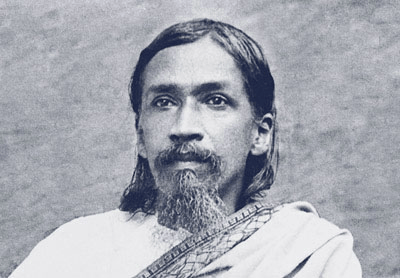
Central to Aurobindo’s thought is his Darwinian-inspired ‘evolutionary’ theory of consciousness. In the same way that humans possess a ‘unified’ consciousness in relation to animal-consciousness, Aurobindo believes that a higher form of consciousness exists relative to our limited human forms. And we know these higher-states exist because Yogis have achieved them — or at the very least, gestured towards them. This also, by the way, serves as the teleological basis of why we should strive to achieve these states of being.
Justification for this teleological perspective has parallels to the Hegelian dialectical process of ‘becoming’ — despite Aurobindo’s claim to have no Western philosophical influences. Regardless, just as the oak tree is the supreme realisation of the acorn, Aurobindo posits that super-consciousness is the ultimate goal of animal or human consciousness.
Something else I found fascinating in the book was a discussion of Western vs Indian approaches to the pursuit of inner harmony and dealing with unwanted instinctual, animal drives. In Western psychology, these conflicts lie outside our conscious awareness in what we call ‘unconscious’. The concept of the unconscious has its roots in Freud’s early observations of mechanisms of repression that manifest in the symptoms of neurotic patients. As such, the modus operandi of psychoanalysis to shed light on our unconscious drives and to disentangle the relationship between Id and Ego. On the other hand, Indian thought, according to Aurobindo, gives priority to mystical tradition of spiritual purification. As an alternative to the bottom-up approach of psychoanalysis, Sen proposes that we should strengthen ourselves spiritually and address our imperfections in a top-down manner. Sen tells us this can be achieved by following the yogic practices as elaborated upon by Sri Aurobindo.
Altogether, this was a fascinating read that succeeded in introducing Indian psychological concepts without wading into the more paranormal territory of karma and reincarnation. It touched on traditions in Indian thought that describe the human psyche in far more sophistication and granularity than I’ve encountered in Western approaches. Indeed, the Upanishads had long ago defined different aspects of personality that span the perceptual, biological and intuitive worlds. And of course, Hinduism has long proposed the existence of a psychic reality beyond conscious awareness. Moving further, I suspect, and as Aurobindo alludes, we cannot ignore the spiritual dimension if we wish to pursue these ideas more deeply.
 patrick 林香麟